Blog
-
President Trump Expands U.S. Commercial Fishing in Three Marine National Monuments
- July 8th, 2026 — by Jordan Young — Category: Marine Monuments
President Donald Trump recently issued a proclamation, “Restoring American Commercial Fishing in the Pacific,” seeking to expand commercial fishing access in three Pacific Marine National Monuments. The three monuments affected are the Papahānaumokuākea Marine National Monument, Mariana Trench Marine National Monument, and Rose Atoll Marine National Monument. The proclamation removes previous restrictions set on each monument’s protected area to allow commercial fishing access to American-flagged vessels and the Secretary of Commerce to issue transport permits to foreign-flagged vessels for transporting harvested fish out of the monuments’ waters.
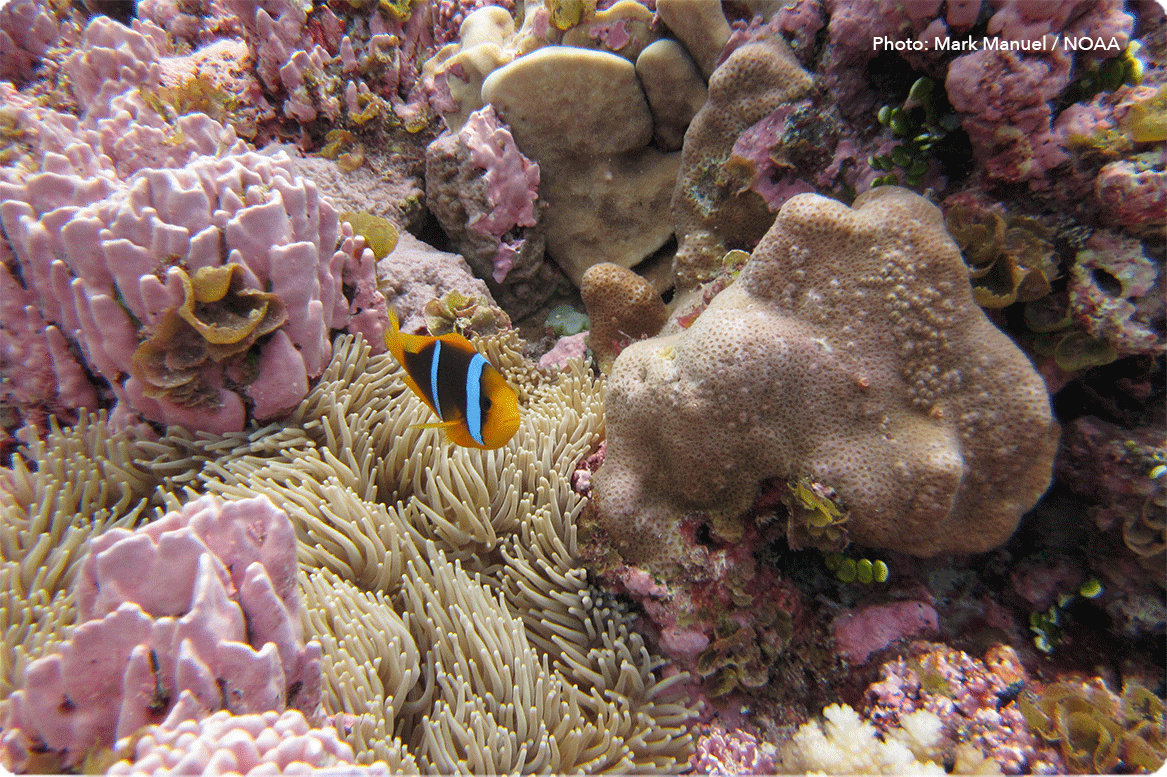
The Papahānaumokuākea Marine National Monument, which surrounds Hawai’i's northwestern islands, is one of the largest marine conservation areas in the world, encompassing an area larger than all of the national parks combined. Under President Trump’s new proclamation, the Mau and Ho’omalu Zones within the monument will be open to American-flagged commercial fishing vessels. The Rose Atoll Marine National Monument, located 130 nautical miles off the coast of American Samoa, encompasses over 13,000 square miles of Pacific waters. It is home to the largest number of nesting turtles in the world, including green and hawksbill sea turtles. Fishing by American-flagged vessels will be permitted in the monument’s waters within twelve nautical miles of the coral atoll. The Island Unit of the Mariana Trench Marine National Monument will also be open to commercial fishing. The Island Unit, located east of the Philippines, encompasses the three northernmost Mariana Islands and boasts an area with the highest density of sharks in the Pacific Ocean, along with the highest large-fish biomass in the Mariana Islands.
In his proclamation, President Trump modified five previously ordered proclamations by using the powers vested in the Office of the President under the Antiquities Act of 1906. The Act authorizes the President to declare historic landmarks, structures, objects, or scientific interests located on federally managed land. 54 U.S.C. § 320301(a). While the administration interprets this to include modifications to existing monuments, recent litigation has challenged this authority.
In 2025, President Trump issued a proclamation reducing the protected areas of the Pacific Islands Heritage Marine National Monument, located off the shores of Hawai’i. In response, an environmental protection coalition, represented by Earthjustice, filed suit in federal court. The court ruled in favor of the coalition, vacating policies set under the proclamation to expand commercial fishing; however, the court limited its holding to issues of administrative procedure and did not issue a holding on presidential authority to modify monument borders. Kāpa‘a v. Trump, 794 F. Supp. 3d 793, 823 (D. Haw. 2025). More recently, the Tenth Circuit issued a decision holding that presidential decisions regarding monument boundaries are reviewable by the courts. Garfield Cnty. v. Trump, Nos. 23-4106 & 23-4107, 2026 WL 1801091 (10th Cir. June 23, 2026). This suggests any future presidential orders to shrink existing National Marine Monument boundaries will likely face litigation and judicial review.
Some members of Congress also seek to modify federal law to prohibit presidents from modifying fishing regulations within existing monuments. On May 19, 2026, Republican Congressmember Aumua Amata Coleman Radewagen of American Samoa introduced H.R. 8904, seeking to amend the Magnuson-Stevens Fishery Conservation and Management Act. The bill would prohibit any president from modifying fishing regulations in marine national monument sites. As of June 3, 2026, the bill has reached its subcommittee hearing, but no decision has been made to introduce it to the larger congressional body.
While previous administrations have used the Antiquities Act to expand the boundaries of existing national monuments, President Trump has instead focused on increasing commercial fishing access within existing monuments. Some fishing groups, including the Western Pacific Regional Fishery Management Council, have applauded these efforts. Conversely, the environmental advocacy group Earthjustice has condemned it. The group recently announced its plans to fight any implementation efforts. As legal challenges to both the Antiquities Act and proclamations continue to develop, management plans for the three Marine National Monuments affected remain uncertain.

Jordan Young
NSGLC Summer Research Associate
-
Stay Current with
Our Publications
Subscribe today to our free
quarterly publication, The SandBar
— and to our monthly newsletter,
the Ocean and Coastal Case Alert.
Blog Post Archive
2026
2025
2024
2023
2022
2021
2020
2019
2018