Blog
-
Environmental Groups Challenge NMFS’ Horseshoe Crab Decision
- July 10th, 2026 — by Vishnu Gadepalli — Category: Endangered Species
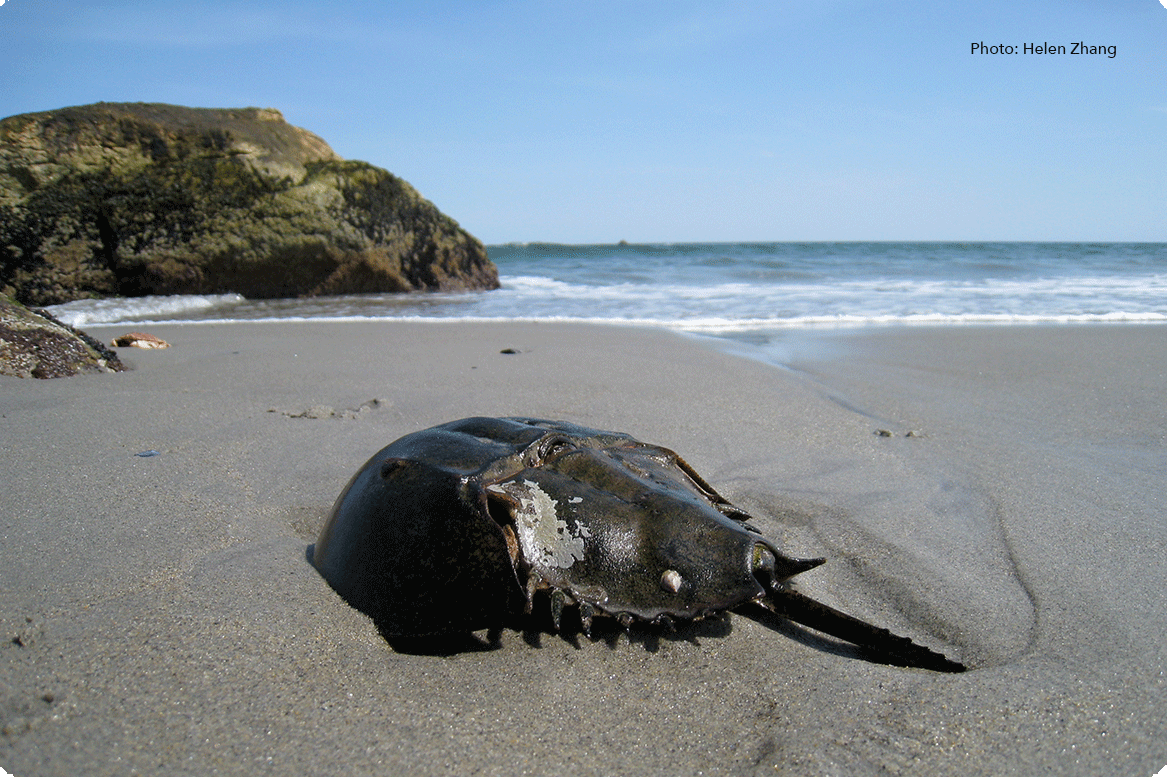
Horseshoe crabs have existed in the ocean for over 450 million years, surviving mass extinctions and ice ages. However, conservation groups claim that their existence is now at risk due to human activities.1 The groups assert that horseshoe crab populations have dwindled by more than 70% in recent decades, as they are routinely harvested for bait and their blue blood is drained for biomedical testing. In March, the Center for Biological Diversity (CBD) filed suit in federal district court after the National Marine Fisheries Service (NMFS) declined to consider listing the Atlantic horseshoe crab (Limulus polyphemus) under the Endangered Species Act (ESA).1
Background
Biomedical companies harvest horseshoe crabs and use their blood for the Limulus Amebocyte Lysate (LAL) test, which detects endotoxin contamination in vaccines and medicines.3 Synthetic alternatives are widely used in Europe and Asia, but companies in the United States are not required to do so. Horseshoe crab harvests for biomedical purposes have doubled over the past seven years and have exceeded one million crabs in 2024.4In 2023 and 2024, environmental groups filed two separate petitions for NMFS to list the Atlantic horseshoe crab as threatened or endangered under the ESA and designate critical habitat for the species along the Atlantic and Gulf coasts.5 The petitions cited habitat loss, overharvesting, and biomedical bleeding as primary threats.6 Under the ESA, agencies have 90 days (“to the maximum extent practicable”) to decide if a petition presents "substantial scientific or commercial information" to warrant a full 12-month status review.7 This is a relatively low threshold, since the agencies do not need to conclusively show that listing is needed – they only need to show it may be. That said, in February 2026, NMFS decided that the petitions fell short.
NMFS's Findings
NMFS concluded that the petitions filed by CBD and the Friends of Animals (FOA) relied on outdated data, with portions of their argument regarding northern population declines relying on a 2017 review paper that drew from an older 10-year study spanning from 2001 to 2010. The agency pointed to newer assessments from the Atlantic States Marine Fisheries Commission (ASMFC) that painted a different picture. A 2024 ASMFC assessment found that mature female horseshoe crab populations rose from approximately 6.1 million in 2003 to 16.2 million in 2022, and 13 of 14 regional populations are currently classified as either “viable” or “functional.”9 NMFS noted that ASMFC bait-harvest quotas have never been exceeded over the last 26 years and concluded that biomedical bleeding mortality rates are sustainable given current population trends.10 The agency rejected CBD’s claim that the ASMFC’s population modelling procedures artificially inflate population estimates.11The Lawsuit
CBD filed suit in the U.S. District Court for the District of Columbia challenging NMFS’s findings and requesting the court to compel a full status review.12 The complaint argues that the agency’s decision violates the ESA and the Administrative Procedure Act. The plaintiffs claim that the agency improperly used a heightened standard of review and relied on third-party information for the 90-day finding. They also allege the agency arbitrarily determined that there is no significant portion of the species’ range where listing may be warranted. A ruling in CBD’s favor would not automatically result in ESA protections, but rather it would require NMFS to take a harder look at the evidence.The stakes extend beyond just the horseshoe crabs. The red knot (Calidris canutus rufa) migrates 19,000 miles every year between South America and the Arctic, and it depends almost entirely on horseshoe crab eggs to fuel that journey. The red knot is already listed as threatened under the ESA, and the health of horseshoe crab populations and overharvesting has already factored into that listing decision,13 a reminder that when one species struggles, others follow.
1 Press Release, Ctr. for Biological Diversity, Lawsuit Seeks Endangered Species Act Protections for Horseshoe Crabs , (May 28, 2026).
2 Id.
3 Nat’l Oceanic and Atmospheric Admin., Endangered and Threatened Wildlife; Ninety-Day Finding on Petitions To List the Atlantic Horseshoe Crab (Limulus Polyphemus) Under the Endangered Species Act, 91 Fed. Reg., Feb. 18, 2026, at 7459
4 Ctr. for Biological Diversity, supra note 1.
5 Nat’l Oceanic and Atmospheric Admin., supra note 3, at 7458.
6 Id. at 7459-7460.
7 The ESA listing process is outlined in 16 U.S.C. § 1533(a)-(b).
8 Nat’l Oceanic and Atmospheric Admin., supra note 3, at 7451-7452.
9 Id. at 7454-7456.
10 Id. at 7458-7459.
11 Id. at 7459.
12 Complaint for Declaratory and Injunctive Relief, Ctr. for Biological Diversity v. Piñeiro Soler, No. 26-cv-1831, at *3 (D.D.C. filed May 28, 2026).
11 Ctr. for Biological Diversity, supra note 1.

Vishnu Gadepalli
NSGLC 2026 Community Engaged Intern
Stay Current with
Our Publications
Subscribe today to our free
quarterly publication, The SandBar
— and to our monthly newsletter,
the Ocean and Coastal Case Alert.
Blog Post Archive
2026
2025
2024
2023
2022
2021
2020
2019
2018