Blog
-
High Seas Treaty Goes Into Effect
- February 13th, 2026 — by Charles Miller — Category: Miscellaneous
- Tweet
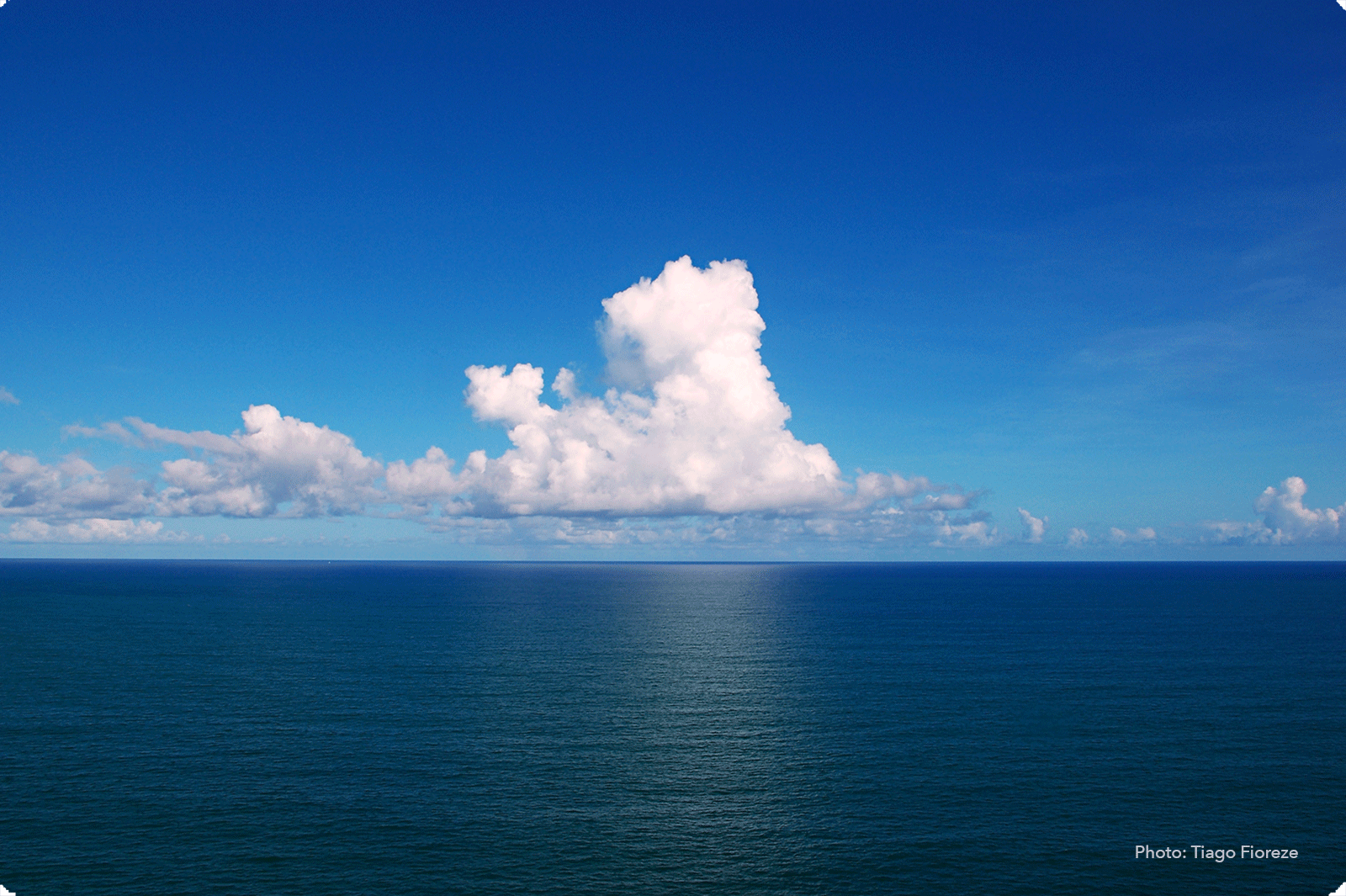
The United Nations (UN) has announced the agreement to protect marine life in international waters, called the Biodiversity Beyond National Jurisdiction (BBNF) treaty, or the High Seas Treaty (the Treaty) has officially entered into force.1 Its purpose is to protect the ocean zones that lie beyond national waters, called the “high seas.”2 While the UN has discussed a possible agreement governing the high seas for the last two decades, serious talks only began in 2017.3 The impetus was both to protect marine life generally, and to reach the UN’s goal to protect 30% of the Earth’s land and water by 2030.4 The Treaty text was finalized in June of 2023, but required 60 countries' to ratify it before it became legally binding.5 This requirement was reached on September 19, 2025, and the Treaty officially went into effect 120 days later, on January 17, 2026.6 As of February 11, 85 countries have ratified the Treaty.7
The high seas are under increasing threat from overfishing, climate change, and seabed mining.8 These issues have been intensifying, and environmentalists warn that without proper protection, there may be irreversible harm.9 In particular, the growing interest in prohibiting seabed mining is one of the reasons for the treaty’s final ratification.10 The minerals found at the bottom of the ocean, such as nickel, cobalt, manganese and copper, have substantial value for electronics manufacturing, leading interested parties to argue that the economic gains of deepsea mining outweigh potential environmental impacts.1 For example, a study funded by the Metals Company, a corporation looking to be the first to commercially mine the ocean floor, found that the disturbances caused by mining would decrease animal density and richness by 37% and 32%, respectively.12 However, the Metals Company has said those numbers are less than expected, and the impacted animal populations are expected to recover over time.13 The Metals Company argues that, over the following decades, impacted populations can recover with careful protections.14 Those opposing deepsea mining argue that the sediment caused by mining will also impact animal populations and the ocean floor, but the Metals Company claim that this impact can be adequately mitigated.15 If permitted, the corporation plans to collect 1.5. million tons of metal nodules within its first year of operation.16 However, while the study was necessary due to the novel field and emerging deepsea mining industry, more data is desperately needed for a future environmental impact statement to fully understand the impact of deepsea mining.17 The company has projected over $23 billion in value generated, and hopes to start mining in late 2027.18 But nearly 40 countries, including Germany and France, 4 states, and 2 U.S. territories have called for a prohibition on seabed mining, making it unclear if they will be able to start then.19
Additionally, the Treaty mandates environmental impact assessments to be done ahead of any potentially disturbing activity, and public notices to be published prior to such activities.20 Nations must also promote the Treaty’s objectives when participating in other international bodies governing high seas commercial activity.21 The decision making processes, recommendations for protected areas, and other rules of function will be fleshed out at the first Conference of Parties, to be held within a year of ratification.22 Going forward, the Conference of Parties will be responsible for enforcing the Treaty.23
Although the Treaty is hailed as a step forward for ocean conservation, the Treaty has a few glaring absences—including the US, Russia, India, and the UK.24 The US originally signed the Treaty in 2023 under President Biden, but the Senate failed to ratify it.25 Now, it seems unlikely that the US under President Trump will ratify the agreement, given the current administration’s interest in exploring commercial seabed mining.26 Regardless of these countries’ involvement, the Treaty makes history for protecting these extra-national areas, and creating a new framework for international marine protection.
1 Conor Lennon, Game-changing international ocean treaty comes into force, United Nations (Jan. 15, 2026).
2 Id.
3 Sachi Kitajima Mulkey, World’s First Treaty to Protect the High Seas Becomes Law, N.Y. Times (Jan. 17, 2025).
4 Id.
5 Historic High Seas Treaty enters into force, launching a new era of global ocean governance, High Seas All. (Jan. 16, 2026).
6 Agreement Under the United Nations Convention on the Law of the Sea on the Conservation and Sustainable Use of Marine Biological Diversity of Areas Beyond National Jurisdiction, UN Doc. A/CONF.232/2023/4 (June 19, 2023).
7 Status of Treaties, Chapter XXI, Law of the Sea, United Nations, (Feb. 11, 2026).
8 Annika Hammerschlag, High Seas Treaty Gains Momentum as 18 New Countries Pledge Support, AP News (June 10, 2025).
9 Id.
10 Macron says imposing a moratorium on seabed mining is 'an international necessity', Le Monde, (June 9, 2025).
11 Id.
12 Stewart, E.C.D., Wiklund, H., Neal, L. et al., Impacts of an industrial deep-sea mining trial on macrofaunal biodiversity, Nature Ecology Evolution (2025).
13 Sachi Kitajima Mulkey, , What Scientists Found When a Deep Sea Mining Company Invited Them In, N.Y. Times (last updated Dec. 8, 2025).
14 Daniel O.B. Jones, et al., Long-term impact and biological recovery in a deep-sea mining track, 642 Nature 112 (Mar. 26, 2025).
15 Mulkey, supra note 13.
16 Id.
17 Id.
18 TMC Releases Two Economic Studies with Combined NPV of $23.6B and Declares World-First Nodule Reserves, The Metals Company (Aug. 2025).
19 Voices Calling for a Moratorium, Deep Sea Conservation Coal. (last visited Feb. 10, 2026).
20 High Seas All., supra note 5.
21 Id.
22 Agreement Under the United Nations Convention on the Law of the Sea on the Conservation and Sustainable Use of Marine Biological Diversity of Areas Beyond National Jurisdiction, pt. VI, art. 47, United Nations (June 19, 2023).
23 Id.
24 Lennon, supra note 1.
25 Press Release, U.S. Dep’t State, Transmittal of the High Seas Treaty to the Senate, (Dec. 18, 2024).
26 Sachi Kitajima Mulkey, , U.S. Takes a Step Toward Approving Seabed Mining in International Waters, 642 N.Y. Times (last updated Dec. 26, 2025).Charles Miller
NSGLC Research Associate
- Tweet
Stay Current with
Our Publications
Subscribe today to our free
quarterly publication, The SandBar
— and to our monthly newsletter,
the Ocean and Coastal Case Alert.
Blog Post Archive
2026
2025
2024
2023
2022
2021
2020
2019
2018